Saturday, 19 April 2014

Creativity, Craft and Talent: Three Things I Wish I Had More Of

I really didn't want to watch this... How the hell do I begin to even explain the concept of creativity?

I suppose we should start with a definition. The Oxford Dictionary defines it as "Relating to or involving the use of the imagination or original ideas to create something". Unfortunately that description hasn't made this any easier to write. In fact, John Cleese's words ring more true when it comes to this post; "The reason why it is futile for me to talk about creativity is that it simply cannot be explained"

But lets talk about it anyway.

A common misconception about creativity is that it is just about drawing or dancing or making music. There is SO much more to being creative. Like the definition that Oxford Dictionary gave us, it's also about imagination and original ideas and those are not just limited to painting a picture. Problem solving requires creativity and a lot of what we do as game artists is about solving problems. Coming up against boundaries and figuring out how to get past them, as well as creating beautiful assets and stunning visuals.

Being creative has always been something that I've taken pride in. In primary school I was always the girl people would come to for drawings. I can still remember when I would sit on a potty in my front room with a little table, a crayon and some paper. However, when I got to secondary school, that creativity was pulled out of me, and pulled out of me hard. My school completely disregarded art, barely any funding was given to our department and we weren't taken seriously. Because I was "clever" I had always been encouraged to do essay subjects or maths and sciences but any kind of creative subject was discouraged and written off as not useful. The worst part was, even in my art class, my creativity was stifled. Unless the art you were producing was the type of art that the teachers liked then you were screwed. There wasn't a lot of room to look at stuff like Game Art then. When I'd announced to my teachers that I was going to study Game Art Design I was told multiple times I was making a mistake, it wasn't English Literature so it was looked down upon.

After watching Sir Ken Robinson's TEDtalk on schools killing creativity, I completely agree with him. He made some fantastic points. My favourite quote from this talk is "The consequence [of our current education system] is that many highly talented, brilliant creative people think they're not because the thing they were good at in school wasn't valued, or was actually stigmatised". This talk happened in 2006 and these words are still true. How much does that say about the state of our system? Game Art, in particular, has been stigmatised because video games themselves have such a huge stigma surrounding them. People seem to assume that you spend all your time playing, but they don't realise, like all creative subjects, it's a huge amount of hard graft that you need to put in.


The thing about creativity is it's about NEW IDEAS and IMAGINATION and using those to create something. Looking at the Games Industry right now... innovation isn't everywhere, especially in AAA titles like Call of Duty. In fact, in my opinion, sequels are a big problem in the industry. (Well... I say that, while still gushing all over Dragon Age Inquisition... ) My biggest problem with sequels is the lack of innovation. Innovation is the product of creativity and titles like Call of Duty haven't really added anything new other than improved graphics. There isn't a lot of creativity there because you're missing part of the creative process and you're missing the innovation. New IP however, titles that are trying to bring new ideas into the industry are barely given any publicity.


There are a few different reasons for this "sequelitis" that the games industry has at the moment. A lot of it has to do with making money because, hey, that is the purpose of  business. A lot of it, however, has to do with the players. Gamers demand sequels to their favourite franchises and show companies that beating a dead horse is acceptable because they will vote with their money. Don't get me wrong, though. Sequels aren't always bad. Some games are written with a trilogy planned out, or they visit something different and interesting. A lot of games are popular because of their interesting stories, like Dragon Age (I am really excited for Inquisiton). The difference is some sequels are able to actually innovate and introduce new ideas to their games, where as others just rehash the previous game in the franchise. Those kinds of games are killing a lot of the originality and creativity the industry had.

However, there are a couple of things that might be able to pull us out of the reboot era that we seem to be in. The first one is the next generation of consoles. Mike Williams wrote a really interesting article about this on gamesindustry.biz. Mark Nilsson, the producer on the Need For Speed franchise, made a really interesting point about the power of the new machines. "It makes us think differently," "Every time there is a transition we start thinking about what would be possible. We are not locked into old boundaries anymore. From that we get great innovations like AllDrive. The systems are giving us power to do more, more AI, more particles etc. Just turning everything up really."


As I touched on earlier, boundaries are an interesting concept when it comes to creativity. Some people argue that they improve your creativity, others argue that they restrict you and, I suppose in some ways they are both true. In terms of the technological boundaries that you have to take into account when designing a game, they can really reduce your creativity. Like Jonathan Blow said "Creatively, we build and we assume that we have enough power in rendering." Creatives just create so when you've made something you just assume it'll work and if it doesn't, you've got to break down that thing you made and occasionally reduce it in technology. The technology might not have the power to do what it is you want. 

HOWEVER, these boundaries can pave the way for some incredibly creative solutions to these problems. Creativity is about new ideas and these new ideas often come in the face of adversity. Problem solving is just as valid of a creative skill as being able to paint a picture. Engineers will create new game engines that can handle more advanced and detailed models or effects, and will create new consoles with improved abilities to handle the graphics. Overcoming problems with new ideas, which can, in turn, leads to new ideas within the games. The same rings true when I look at my briefs that are set for at University. The more defined the brief, the more creative you have to be because you need to overcome the boundaries that are set to create something unique. It's a big, beautiful, creative circle that leads to new and interesting changes within the industry.


The problems come when people don't want the change and that's when we get stagnation. However, Indie developers are saving us there. With services like Steam Greenlight and Kickstarter, new companies are able to come into this industry or reboots and sequels and bring us new IP with refreshing approaches to gameplay, stories and visuals. They will take risks, unlike many bigger developers who are willing to just carry on down the same, stagnant path and, let's be honest, creativity is all about taking risks.
So, to sum it all up, creativity is weird. It encompasses so much. It's hard to write about and it's hard to define. Within the industry, the reboot era that we are stuck in is stifling the creativity that made many of these AAA developers so successful. But with the introduction of new consoles, the ability to explore new ideas and techniques, and the Indie Games market becoming more and more popular, I think there is still hope for us.


Then again, this is all just my opinion. Like John Cleese says "Telling people how to be creative is easy, it's only being it that's difficult"

Just, watch it. 


Links used:

Sunday, 13 April 2014

Specialist or Generalist: It's Time To Think About My Career -cries-

The Games Industry is really weird.
There are a variety of different companies from AAA developers to little Indie studios and they all require a different set of skills. Well, I say different... Slightly more/less specialised depending where you go.
To understand why that is, you need to look at the positions that are available within the industry and which companies require which positions. Early on the in industry, game artists needed to be good at everything because there were so few and far between. You needed to generalise. Now, however, the entire industry has changed.

When looking at the jobs that AAA developers offer, you can see a trend. For example, if we look at DICE's vacancies, we can see that the job titles are all very specialised. Lead Character Artists, Level Artists, VFX artists, 2D artists, not even including all the Software Engineer jobs, the Game Engine Engineers and the Marketing. This is exactly the same when you look at the Bioware career opportunities. The job descriptions and the responsibilities are very specific.

One day...

Within the AAA developers, specialised jobs are key. Often, the teams working on these games are in the 100s so there is no need for everyone to be able to do everything. This means that the artists that work there will be specialised in one area, whether it be character art, environment art or visual effects. For example, the team that worked on Grand Theft Auto V was over 1000 strong and they worked for 5 years so there was no need for generalising. Because of the huge number of people working on the team, they will be split up into various departments that will work together on different areas of the game. One team might have responsibility for one specific level.


In the world of Indie studios, however, it's very different. Teams often consist of only a few people. Occasionally, like in the case of Super Meat Boy's Team Meat, it's only two people. This means that artists in Indie companies often have to be able to do everything, or at least a little of everything. You don't have anyone else to rely on for your UI design so you need to understand it. Occasionally you'll need to know how to do some basic animations and rigging because it's cheaper to hire someone who knows a bit of rigging rather than someone who doesn't. Applying for a job in the Indie games industry is all about showing you can do it all.


Valve take an interesting approach to their roles and responsibilities . In fact, the way they approach it is the "T-shaped model employee", shown in their employee handbook, which makes for a pretty interesting read. We're taught about this in our classes and lectures at university as well.

 
Be awesome at one thing, be good at everything else.


Due to the nature of the games industry at the moment and the huge boom in Indie game development thanks to sites like Kickstarter, the ease with which people can get hold of software to develop their games, and the mobile market becoming a huge source of revenue for aspiring game artists, Indie developers are quickly becoming the source of jobs for graduates. It doesn't help that, if you look at any job description for many AAA developers, most require you to have however many years of experience in the industry as well as a game shipped.

As an aspiring student, this is all incredibly important to me... Knowing the nature of the industry before I aim to wedge my foot into the door means that I know how to tailor my portfolio.

 Maybe, one day, I'll be able to get enough experience and have shipped enough games for Bioware to want me...

A girl can dream. 

Links used:

Saturday, 12 April 2014

Interaction Design: Everything BUT The Oculus Rift, Sorry To Disappoint?

Interaction design is an interesting concept and the questions I've been provided with have given me some food for thought. See, I want to talk about the Kinect, the Oculus and the Wii and how we are now using ourselves more as the controllers. HOWEVER, another question was asked in the brief for this task.

" Games are inevitably complex entities demanding constantly changing inputs and responses from the player. Given that Call of Duty is more demanding than Word, how do the designers enable such complex interactions relatively ‘intuitively’? Are these interactions in fact intuitive at all?"

For some reason I suddenly want to talk about UI design because this article on Gamasutra that was written by Anthony Stonehouse is absolutely fantastic in explaining the different concepts of UID. UID is such a cool topic because it's about psychology based as well as artistic ability. Menus and HUDs and such are always designed thinking about player interaction, especially with mobile games. We previously had an talk at university from Richard Tawn, from Exient, who went into detail about the UI design behind the game Angry Birds Go on mobile devices and it was fantastic and really informative. Use of colour and the size of buttons are all carefully decided and tested. It's weirdly interesting.

Angry Birds Go [x]

Angry Birds Go [x]

The other question that was asked however was this:

"Game engines can handle complex physics simulations, but have traditionally been hindered by the limitations of screen/keyboard/mouse interaction. What effect could the rise of the Wii and the new generation of motion controllers have on game design? What about the impact of 3D technology?"

This leads me on to all the various types of controllers that the games industry has bought to us. Basic two-handed controllers, joystick, steering wheels, pedals and keyboard control schemes are all big examples. Even light guns and other arcade game controllers are interesting to talk about. Obviously, motion sensors are now a big thing with the improvement of the technology see with the Wii, then Kinect and now the Kinect 2.0  with the Xbox One.  One that is often overlooked in terms of interaction design is touch screens however.

Touch screen gaming has really come into its own recently. Originally introduced with the Game Gear (though it flopped), the Nintendo DS really bought it forwards into the forefront of gaming. This allows for a different kind of interaction that you get with a controller; it's far more of a visual experience. This has paved the way for the booming mobile gaming market that relies solely on a touch screen experience. It could be argued that it's a more interactive and intuitive experience than gaming with a controller ever has been.


For example, The Room, from Fireproof games, has been a huge success with multiple awards, selling over 1.4 million copies as of March 2013 [x]. Clearly, the touch screen mobile experience is inviting in a whole new group of gamers and proving them with a unique experience to that of consoles and PC. The way in which you interact with the objects within the room has a realistic feel, with the objects reacting to your touch. UI Design has a big part to play in this as well as your interface is something that players have to interact with via touch. The constraints of the technology are what make is so interesting in the case of games like The Room, and clears the way for some interesting and innovative design choices within games.

Again, Gamasutra has a fantastic article about the designing for touch screen devices and I'd highly recommend giving it a read through if you're interested at all in this topic. They also have a good article about The Room as well.

You may have noticed I've been skirting around the topic of motion control and the Oculus Rift's VR technology. It's been talked about so much, but it's most definitely worth a mention because that is where gaming is heading.

I've got experience with the Wii and both of the Kinects. Motion control is something that still needs A LOT of work put into it. However, the potential it has is incredible. A lot of people actually hate the idea of motion controls. Difficult to make it work without the controls being completely useless or without having you looking like an absolutely idiot. "Games shouldn't just look more real but they should feel real, too, yeah? Out with buttons. In with realistic movements. No, no, no. Terrible idea." says Stephen Totilo from Kotaku and, in some cases I agree. However, you cannot deny the pull that motion control has had in increasing the popularity of the games industry. The Wii bought in so many people who had never previously been interested in games because of that interactivity and because of the promise of something unique. Is the same with the Kinect. The Just Dance franchise is incredibly successful but there are few "hardcore gamers" who are interested in it. Clearly, however, motion controls are onto something.

Just Dance 2014

After reading, yet again, another couple of Gamasutra articles about motion controls [x] [x] (seriously why are you reading my blog, just read their stuff, it's awesome), I came across a man called Douglas Wilson, who has an interesting view on motion controls. He is the man behind the game Johann Sebastian Joust, a multi-player game that utilises the motion controls in an interesting way. 

Just... watch the video:

Johann Sebastian Joust

This man has got some incredibly interesting theories. While many designers swear off motion controls, he's all for them. In fact, he believes that the only way they will improve is if everyone bands together and talks about the problems they've encountered when designing for these games, so they can find out what works and what doesn't. 

My kind of man.

The problem with designing control schemes surrounding motion is that we're still designing those controls with buttons in mind. "[It revolves] around a binary kind of input – either you did the "correct" gesture or you didn't. The system would miss the gesture you swear you performed correctly; the system would register the gesture you swear you didn't perform"(Kris Graft) This causes clunky controls that the "hardcore" gaming community just make fun of, which puts companies off designing for it. "The beauty of physical movement is that it's rich and complex,""That is to say, physical movement is very 'analog.' Many of the best physical games figure out how to let players move in expressive ways, rather than prescribing exact gestures." says Wilson. Therefore, the control schemes that we design needs to be more organic rather than "analog" and we'll get somewhere.

God, this man knows how to use words.

Anyway, another thing attributed to the negativity surrounding such an innovative technology is public expectation. "The rhetoric goes that motion control is supposed to be like the Holodeck or virtual reality," says Wilson. While the Oculus Rift is starting to provide some VR control within the industry, he is right. People are expecting Star Trek Holodeck and we are NOWHERE near that yet and people are disillusioned as to what they are getting. They expect immersion but they just have clunky control schemes that need more research and more work because the industry is still stuck in the mindset of button-pushing.

I know Lt. Barklay... I want a holodeck too...

Now I've finishing crying over how awesome Douglas Wilson is, I'll wrap it up.

" What effect could the rise of the Wii and the new generation of motion controllers have on game design?"

Well. Motion control still has SO much potential but we are so far away from where we need to be in terms of technology. As my main man, Doug, says " "It's about getting people to do stupid crap with weird plastic controllers. … I don't think the industry really put in the time, research or thinking to make radical new stuff." 

We need more research into the control schemes with a more organic, fluid approach before we get the most out of the technology we have. In terms of interaction however, it's clearly doing something right with games like Just Dance and Kinect Sports. People enjoy them an get involved, immersing them in the games. A little more work needs to be done to bring that to the "hardcore market" however.

I didn't get time to talk about the awesomeness that is the Oculus Rift... Guess that means another blog post soon.


Links used:

Saturday, 22 March 2014

Game Engines: I Just Want Stuff To Look Pretty

I've been a little busy lately so... here I am, back again.

There are so many Game Engines. Don't believe me, check out this wikipedia page that literally just lists all of them.

You don't really realise that when you play video games. Or at least, I didn't. Since starting this course I've only had a small amount of experience Game Engines. Unreal was first. Since then I've had a little more experience with Cryengine but that's just the tip of the iceberg. There are hundreds of different engines that all have different advantages and disadvantages. Some are free, others are proprietary, owned by specific companies and only used "in house" but they all do the same job.

They let you put together your game.
The first thing I said when I used UDK was "this is just like playing the Sims" and it really is to some extent. You get to place all these assets you've lovingly crafted into an exciting environment and you feel very accomplished. Until you realise that the time you've spent making those assets is literally a fraction of the time that you need to be spending in the engine. Scripting, lighting, post-processing effects, triggers, particles. ERGH. So many different areas to focus on, so much stuff to do.
The reason there are so many different engines is, I suppose, because each engine has it's pros and cons. Some engines will be better for lighting, other be better for rendering realistic materials, some will pride themselves on the ease with which you can use them.; it all depends on the engine. I've only had a little experience with two engines so much of this will be my own personal experience with these engines, but I've done a bit of research so, so far this is what I can tell.
Pros:
  • UDK has a wealth of tutorials for aspiring Game Artists. Seriously, youtube videos, support forums. You name it. It's incredibly simple to get help with any issue that you're having. 
  • Kismet. It's not something I've had a lot of experience with but it is essentially a scripting tool that is set out in a flowgraph within UDK. It makes it easy for game artists which little scripting experience (like muggins here) to create triggers etc. within the level. It's incredibly useful and is set out much like the material editor so the interface is relatively simple to use. 
  • It gives a very professional look. In terms of rendering, it has a multi-threaded rendering system called Gemini that gives you a 64-bit HDR rendering pipeline. "The raw power behind Unreal Engine 3’s rendering system will push your creations to new levels. Your work has never seemed as alive as it is with Unreal Engine 3" says the Unreal site and I'd have to agree.
  • It's incredibly flexible with a heavy reliance on the user inputing the exact settings they want. 
  • Many AAA games use UDK and look unbelievably fantastic. There is a long list but the notable ones are (at least for me) Mass Effect 1 and 2, Mirrors Edge and Enslaved: Odyssey to the West. 
  • It's also used for some great mobile games, meaning it's got a lot of functionality within the industry, Infinity Blade being the big one.
Mass Effect 2


And of course
  • IT'S FREE (for free games)

Cons:
  • I really don't like the interface. I'm going to be entirely honest, I'm not a fan. I'm not a big fan of the Material Editor or the Content browser and they are a little confusing for beginners.
  • Light Maps. Again, it's all personal preference, but I really dislike making light maps for everything and it means that my workflow takes longer.
  • It's complicated. The big reason why there are so many tutorials is because it's incredibly complicated when you're a beginner. You open it up and there is a block in the centre of a floor. "What am I doing?" was my first reaction.
Huh?
Now, on to Cryengine.


Pros:
  • It is my favourite engine. (This is a matter of opinion, but seriously I love it)
  • It's real time lighting system is beautiful. Seriously. It also means you don't have to waste your time with light maps and baking lighting (I'm looking at you here UDK...)
  • It is ABSOLUTELY GORGEOUS. The Crysis series is the best way to show this. Cryengine is an absolutely beautiful engine. It boasts itself as the "fastest, high-end renderer in the world" according to their website.
  • It's interface is lovely. It's sleek, easy to use and the flow graph system they have, at least in my opinion, is easier to understand than that of UDK.
  • Cryengine has a much faster workflow. Many of the tools are ready made and created to cut down the time you spend messing about with settings in engine. This means quicker results.
  • It is also, at the moment, $10 cheaper than Unreal. That helps.


Cons:
  • It's not as flexible as UDK. Although it has a quicker workflow, UDK wins out over flexibility. 
  • There... isn't that much support for new users. There is a lot of documentation but it's so painfully out of date that it hurts. Scrolling through you can see that buttons are referenced that no longer exist.
  • There aren't nearly as many tutorials out there either so looking through google page after google page is a little tedious.


The thing about Game Engines is, and in my research through the internet this really holds true, you can argue for days on end about which is better, but all these different engines serve different purposes.

If you're looking for flexibility and full control of your project, Unreal is for you
Want hyper-realistic rendered environments and gorgeous lighting from the get go? Cryengine is where you're heading.
Unity is more useful for beginners and also indie developers too, so I've heard, but I haven't used it so I don't feel to comfortable talking about it because I've got no experience. 

Hell, there are a million different engines with a million different purposes. No one is really better than the other. It all comes down to what project you're working on (and what company you're working at, come to me Frostbite3, you beautiful thing)

Sound For Games: I Have A Lot Of Feelings

I'll start this off by says that I have a lot of strong feelings about video games soundtrack.

In fact, it's taking a lot of restraint to not just post 50 videos of different soundtracks that I'm a little in love with. I could talk for hours about how much I love Inon Zur, or Jesper Kyd, or Martin -O'Donnel, or Mike Salvatori or Clint Mansell, or Jeremy Soule, or Jack Wall or Sascha Dikiciyan, or Cris Velasco , Hanz Zimmer or even Trent Reznor... Well, the list goes on. However, that's not going to answer the question "How is sound used in games?" At least not right now it isn't.
First we should take a little look at the history of sound in games. Chiptune. That's where it all started really.  It was common place back in the day because that's all we could afford to include with the technology we had. It improved with sampling and the introduction of MIDI in the 1980s but still, it wasn't up to the standard it is today. 

However, the limited amount of space lead to some of the most memorable pieces of music in gaming history, the Mario Theme or Zelda's Lullaby being the big ones. These themes are imprinted on the minds of adults and kids alike because they have such a strong melody; the tune gets stuck in your head. This isn't an accident either; these memorable themes were created to define the franchises they were a part of, helping them take up a big old chunk of video game history, along with Koji Kondo, the man behind most of them.
Link to the Past - Zelda's Lullaby


Super Mario Theme

You ask someone today to sing you Zelda's Lullaby, chances are they can and many musicians still sample these track and remix them, creating huge numbers of new songs on sites like OC Remix.
Zelda's Lullaby Remix - The Triforce Has Too Many Pieces

Nowadays however, the technology has improved so much as games have become more complex and very often cinematic experiences as well as games. This has lead to so many beautiful soundtracks of varying genres and styles, often rivalling film soundtracks in their quality. We've moved far away from the old days of chiptune, which could be seen as a negative thing because we tend to not have the solid themes that games like Mario used to have. However, we have something entirely different; the ability to evoke strong emotions and create incredible atmosphere within our games. 

Soundtracks, at least in my opinion, are very similar to the previous chiptune themes from the SNES era; they are brand identifiers to the people who play them. Let a person listen to a song from the any Halo soundtrack, chances are they know which series it is. This is done mainly using some kind of motive or genre.

 Seeing as we're on the topic of Halo, I'll use that as my example. Martin O'Donnell, the main composer for the Halo franchise, said in a podcast with Bungie "Master Chief is still green, Cortana is still blue, and so you're going to hear the monks and the cellos" on the topic of the Halo 3 soundtrack. He said he took a " orthodox, almost formal approach to the trilogy". Essentially, the first game was big on the orchestral pieces, the second game had more of a... guitar/rock theme with the help of Steve Vai (MJOLNIR MIX). The third game, however, combines these two to create something gorgeous. Like, O'Donnell says "you're still going to hear the monks and the cellos"; Those are the motifs. You can tell almost instantly what game it's from if you've played it. 


Halo - Orchestral Theme

Halo 2 - Mjolnir Mix

This is a recurring theme with game soundtracks. Each of the soundtracks for different games in the franchise tends to have some kind of underlying motif or instrument involved, usually with the same composer working on it. With Halo it's the monks and the cellos. In Dragon Age, both Origins and 2, Aubrey Ashburn is the vocalist used on the tracks and Inon Zur composes both scores. Her voice is fairly distinctive and there are similar hooks used in both soundtracks so, while they are different games, you can still tell they are from the same franchise.

Dragon Age: Origins - I Am The One
Dragon Age 2 - Rogue Heart

As well as being a brand identifier like those original chiptune melodies, sound is a huge part of what creates the atmosphere and emotion we feel when playing. Older games tended to have and overworld with different levels coming off of it and each one contained its own exclusive theme with its own unique atmosphere. Games like Pokemon also have this, with each town having a different pieces of music to set the scene. For example, LavenderTown famously has some of the most unsettling music with its own urban legend, involving kids getting sick and even committing suicide after listening to it. Each of these worlds had its own atmosphere that didn't change until you switched levels, so there tended to be one solid theme that would play throughout.
Lavender Town Theme - Pokemon Red

However, now that the way we make games has become more complex and we have better equipment and technology at our disposal we aren't stuck with one song per level. In fact, there are multiple songs per level and, in the case of open world games, the music changes all the time. Just look at Skyrim or Oblivion. Because games have become more cinematic now, often the music changes to help push the mood onto the player. In Dragon Age for example, you can be wondering around a forest quite happily until you're ambushed by a group of enemies. The music changes quickly; the contrast between the serene theme of the forest and the brutal, aggressive theme of combat is obvious and sets you on edge a little, letting you know this are heating up. The death of an important character in the plot or a sad/emotional moment will be accompanied by the music to emphasise that.

Well, I've rambled on about soundtracks long enough but I've missed out something important. Soundtracks and music are not the only part of sound design. Ambient sounds are just as important, if not more so in the case of some games. You can use sounds to lead the player around a level, to create tension and suspense and to scare them shitless. A lack of a soundtrack can sometimes be just as effective as a regular soundtrack. A good example of this is Slender. Almost no music involved at all, it's all footsteps, heavy breathing, heartbeats and ambient noise; it's terrifying. See, music doesn't follow you around in the real world so when you want to isolate a player and create that sense of suspense, silence is a great option. Music gives too much away. Then, when you catch a glimpse of the Slenderman, a great big sting booms through the headphones and you jump out of your seat and sprint the opposite way. It's clever and something that horror games especially take full advantage of. 

Slender Gameplay

One of the big things about sound that many aspiring and working game designers overlook (and I know I certainly did) is how INCREDIBLY important it is. The sound design can make or break your game if it's done poorly. After reading Gamasutra's article on Sound Design (which is a great read and way better than what I can write about it) I learnt just how important it is. Randy Thom, a big sound designer for films such as Star Wars V and VI, stated that "a movie must be designed for sound, rather than the other way around" and the same can be said for video games. Sound designers to be involved as early as possible to make sure that every part of your game evokes the right response from the player. In the next generation of consoles and games, sound design has such a huge potential to improve. We just need to work harder at incorporating and planning out the scores and sound effects parallel to the stories and levels; if we do that, we could create some truly incredible experiences within our games.


I said I was trying hard not to post all of my favourite video game sound tracks but... you know what. I don't care. I'm doing it. Listen to these, just to name a few:
Halo 3 - Tribute
Dragon Age: Origins - In Uthenera
Full Soundtrack

Mass Effect 3 - Leaving Earth
Full Soundtrack

Mass Effect- Vigil (Extended)

Borderlands 2 - Menu Theme

Assassins Creed 2 - Family
Hawken - Menu Theme

Mirrors Edge - Still Alive (Instrumental)
Red Dead Redemption - Born Unto Trouble
Full Soundtrack
Final Fantasty XIII - Gapra Whitewood
Full Soundtrack

Saturday, 4 January 2014

Documentation: FMPs Are Scary

F.M.P.

Three letter that have been looming over my head all year. There's a lot expected of me and a lot on the line. So, when asked to write a outline and technical specification as practice for the course, the ideas of what I wanted to do began to swirl around my head. They left me with only one thing being absolutely certain: I have NO idea what I want to do for my FMP.
So that's my summer decided.
Anyway, on with the practice. I searched the interest for some examples of design documents, and found Game Pitches, which had a few examples of design documents, although many of them had been removed. I browsed through the Metal Gear Solid 2 document and the Grand Theft Auto design document to get a feel for what I needed to write about.
So here we go.

Mock FMP Design Document


Project Outline

Personal Aims

The main goal I aim to achieve with this project is create an industry standard AAA environment along with a lead character, NPC and vehicle that will be used as a show reel piece for my portfolio. The concept will be a 1940's Hotel in New York City in a noir style. To fully realise this idea, I must achieve an interesting noir-style atmosphere with my lighting and textures. My secondary aim is to create the environment and vehicle with as much historical accuracy as possible to realise a fully realistic environment and characters that will fit within the period.

Learning Outcomes

- To improve my knowledge of lighting systems in Cryengine 3 to create an interesting and suspense-filled atmosphere
- To show that I can model and texture assets I have created to an industry standard, with a level of photorealism.
- To improve my portfolio with interesting characters that I have designed and fully realised in 3D.

Platform

The platform I am aiming for is the next generation of consoles and, by extension, high-end PCs.

Genre

I am hoping to create a 1950's noir narrative based exploration game, similar to that of Dear Esther or Gone Home.

Audience

I would like to appeal to a wide audience. However, some of the themes I wish to tackle with this project may lead to a more mature audience. Due to its narrative-heavy nature, it is unlikely to appear to the modern FPS fan.

Technology and Software

I will be using Cryengine3 as I am far more comfortable with the software and it's real-time lighting is a real bonus.
For my asset creation I will be using 3DS Max, ZBrush and 3D Coat for retopology.
For my textures I will use Photoshop CC, Crazybump, Ndo2, and Zbrush.

Technical Specifications

Lead Character

Female detective
35,000 triangles
6 2048x2048 texture including face and details (albedo with alpha if necessary, but kept to a minimum, bump, specular with gloss in alpha)

NPC

Male detective partner
Due to player interaction, similar specs to the player character other than the inclusion of LODs
40,000 triangles (LOD0)
1250 triangles (LOD5)
LOD0 - 6x 2048x2048 texture including face and details (albedo with alpha if necessary, but kept to a minimum, bump, specular with gloss in alpha)
LOD5 - 1X1024 texture (albedo)
Textures for each LOD should decrease, keeping them to a minimum. Only albedo textures past LOD2.

A Vehicle

The car itself will be a 1940s Dodge Deluxe Convertible and will be only featured at the beginning of the level.
60,000 triangles (LOD0)
1875 triangles (LOD5)
4x 2048x2048 textures (albedo with alpha if necessary, but kept to a minimum, bump, specular with gloss in alpha)
Textures for each LOD should decrease, keeping them to a minimum. Only albedo textures past LOD2.

An Environment

The environment will be entirely interior. Because of this, it will be built out of efficiently made modular pieces.
1000 triangles (maximum)
LOD2 if overly detailed
Textures will consist of either:
1x 2048x2048 texture detail (albedo, alpha if necessary, normal, specular with gloss in alpha)
1x 1024x1024 tilable texture (albedo, normal, specular with gloss in alpha)
Can be pushed up to 2048x2048 if absolutely necessary.
Will be a variety of these textures that can be reused repeatedly. Will need a list of the modular pieces to be entirely sure of the final texture specifications.

Props and Scenery

Basic props:
1500 triangles - MAXIMUM
LOD2 if overly detailed
1x 2048x2048 texture MAXIMUM (albedo, alpha if necessary, normal, specular with gloss in alpha)
Only albedo textures for LODs
Hero Assets:
Up to 10000 triangles MAXIMUM
LOD3 if overly detailed
2x 2048x2048 textures MAXIMUM (albedo, alpha if necessary, normal, specular with gloss in alpha)
Only albedo textures past LOD2.


I'm sure I'll look back at this next year and laugh at my technical specs, but then again, the likelihood that I'll be developing for anything next-gen next year is low. Still, this was incredibly informative and, you know what, I think I know what I want to do for my FMP now.

This has been a long post. Have a representation of how I feel when I have to think about my FMP in gif form.

Reference used:

Sunday, 29 December 2013

Level Design: Getting From A To B Without Being Bored

Level design is a long, complicated process...

There's a lot that goes into level design that I think people take for granted.  It's a long and complex process that incorporates a variety of different areas that the designer needs to consider.

The primary aim of level design is to create a playable space that your player can navigate with ease to achieve a goal you designer has set out for them, whether that be get from point A to point B, or if it's a multi-player map in which you must hunt down your fellow players. Playability is key; if your player can't navigate the space then you've not designed a great level. However, there is a little more to it than that. You need to make sure that while the player is navigating, they aren't bored out of their minds. While designing a level, you need to continually think "what will the player think about this?" or "will the player be enjoying this?". The purpose of a video game is ENTERTAINMENT so make it fun or people won't be interested in your game.

Suggested workflow for Level Design -University Lecture

There are a few different workflows you can follow when designing levels. The one we learnt about at University is pictured above in flow graph form, but there are others. This article on World of Level Design really helped me understand a little more about the workflow needed when designing your level. Again, this goes back to the planning and concept stage we spoke about in an earlier post, but you need to have a level plan first. This will save you time in the long run and allow you to already have the paths you want your player to follow, and any alternate routes or secret areas you want to have present. After this, block it out in the chosen engine. This is called whiteboxing and in so useful for understanding the size and scale of the playable space, allowing you to figure out where your assets will go and where certain events will take place. It also means you can use screenshots to concept over, so you can visualise the space better. Looking through the polycount forums, a found an aspiring Game Designer by the screenname CurtWad who was working on a project called Argatona Station in 2011 and his whiteboxes are fantastic. I recommend checking out his project.
CurtWad's Argatona Station - Whitebox


CurtWad's Argatona Station - Level Plan

It is a Game Art course I'm on so I'd best talk about the importance of visuals in level design as well. The graphical fidelity is obviously important, but there is more to it than that. REFERENCE IS EVERYTHING. You want your map to be relatively believable. Even in a fantasy setting there has to be something to ground it to reality. For example, even in games like Mass Effect, the environments and levels that they create feel relatively believable. whether it be the Normandy or an alien planet, they feel like liveable spaces.

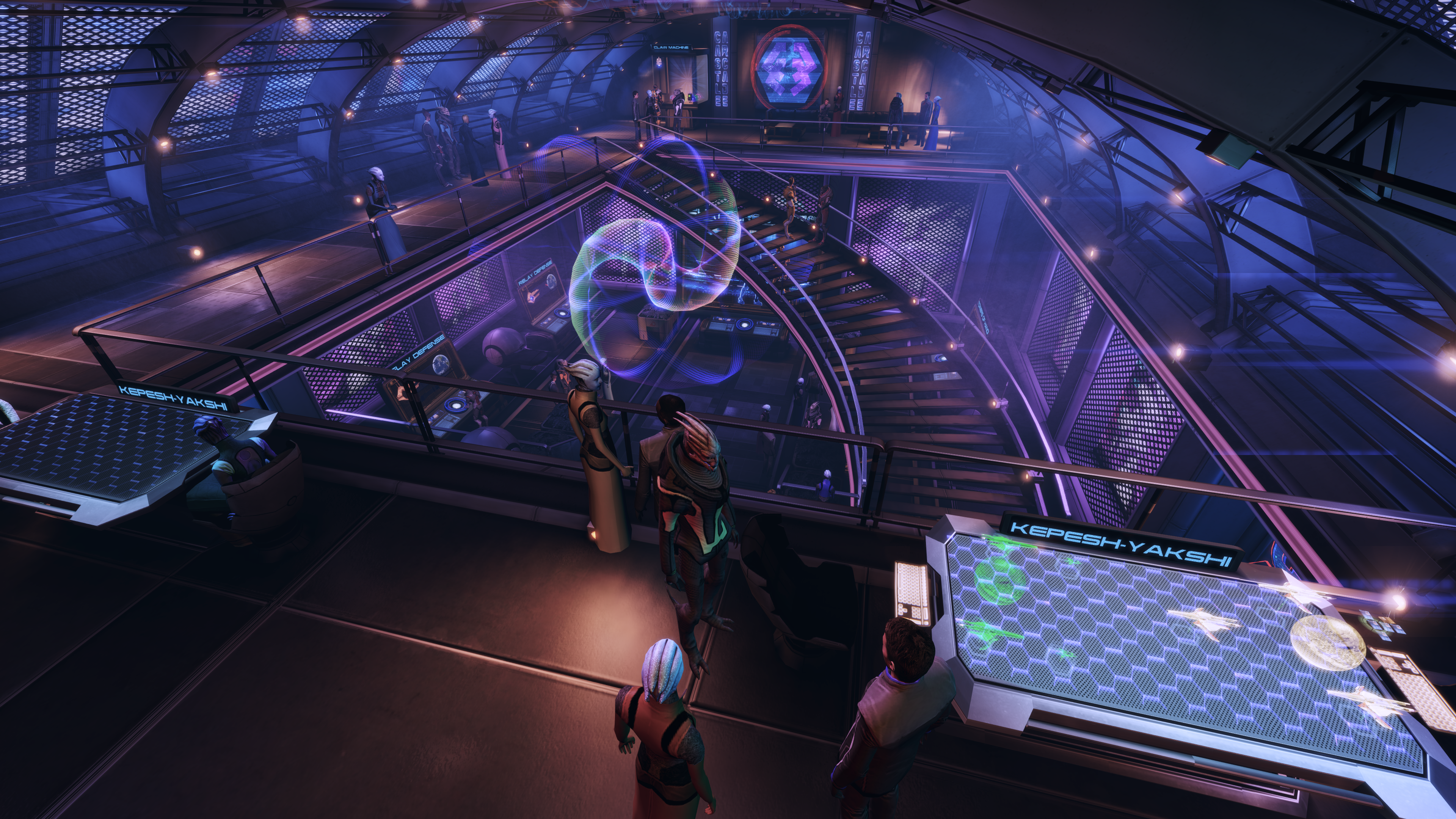
A big thing that you should think about is the uniqueness of your map. Like I explained before, it's all about entertainment. How much is the player enjoying your level? If they've played something that looked exactly like it before, they won't be nearly as interested as they would be if you're giving them a unique experience. This can be achieved through gameplay, but more often than not it's achieved through the visual aesthetic of your level. This can be done with a hero asset, colour scheme or a particular style you've chosen to use your textures or models. Looking back to Mass Effect, you can see it in the Citadel DLC. The Silversun Strip is the new area introduced on the Citadel and the colour scheme is very vivid and bright with lots of blues and purples with neon signs and bright lights. Each area within Mass Effect has a different colour scheme and visual motifs and it helps keep the game fresh and interesting for the player.


Atmosphere is something else you need to take into account when thinking about the visual feel of your level. Again, much like with the Citadel DLC, the colour plays a big part, but lighting is probably the most important thing involved in creating the atmosphere. The lighting and colours in the Silversun Strip and the asset placements and people that populate the area all create this bustling, flashy feel; wealth and excitement.


This is where your reference will come into play as well. Getting pictures of areas with the lighting conditions you want will be invaluable to you when creating your lighting. Especially in exterior levels. Depending on the time of day and the time of year, the lighting conditions will be different so your level should reflect that. It all adds up to creating that sense of realism. Atmosphere can make or break your entire level;  you're aiming for suspense but your level doesn't feel tense or scary, you need to go back and readjust.

Another important thing involved in level design is story. I touched on this when I wrote about environment design in my first year blogs, and reviewing it has made me think about Dead Space in terms of level design. Like I previous explained, within your level you can tell an entire story without using any characters. So many different games do this, from Left 4 Dead to Dead Island to Dead Space (a lot of "deads" there). It helps to create a more realistic, lived in environment and that will give the player, hopefully some extra entertainment  and something more to explore. As well as this, though, your level must convey they actual objective so the player can navigate their way through the map and they understand their purpose there.


This barely covers the complicated formula that is Level Design. There is so much more to talk about and people spend entire careers trying to perfect their abilities in this particular area.

I've been studying Game Art for a year and a bit. I'm no expert, so forgive me.

If anyone reads this and has and tips or interesting theories and workflows, please message me/email me or let me know. I'd be interested to hear any tips you guys have. 

References used: